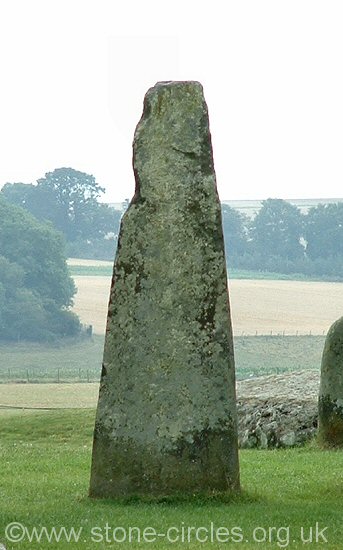
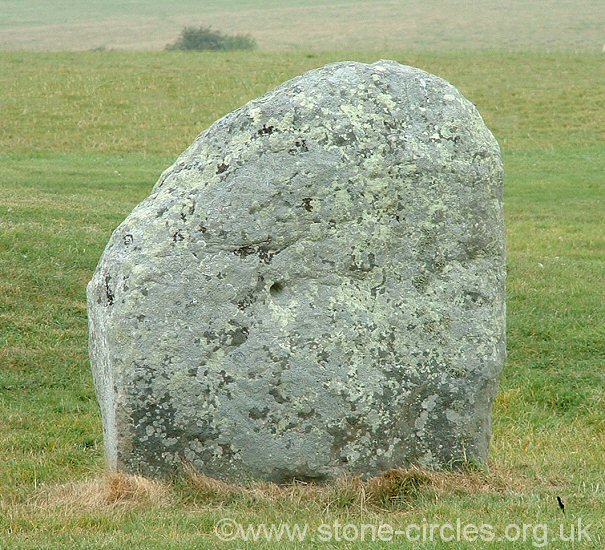
When you first arrive at the Stonehenge stone circle site from the bus, it's a bit of a surprise to look across an expanse of what looks like pasture land and see a circle of stones that look smaller than you were expecting.
Okay, I know this has probably offended the entire British population (because they all read my blog), but it's not the size of these stones that is necessarily impressive, when you remember that they didn't just emerge from the soil as you see them today, but were imported from other areas...a long time ago.
The outer stones, the bluestones, weigh around 4 tons each and the inner sarcen stones weigh in at anywhere from 6 to 50 tons each.
Don't get me wrong. They are huge. In the photo above you can get an idea of size in relation to the people moving about nearby. But I was mostly impressed with what I learned about the when, where and how of Stonehenge.
I think everyone's first questions are:
When did they do this?
Where did they get these huge boulders?
How did they do this?
Can I zoom in on the sheep in the nearby pasture?
Stonehenge is believed to have been completed in three phases over the course of 1500 years, beginning in 3000 BC.
From www.stone-circles.org.uk (All excerpts in quotation marks are from this site):
"Begun in the late Neolithic,
a circular bank nearly 2 metres high and 6 metres wide and with
an internal diameter of 85 metres was built with chalk quarried
from an outer ditch, the bright white fresh chalk contrasting vividly
against the surrounding grassland."
It is believed that the bluestones, the outer stones, were moved from SW Wales about 135 miles from their present site.
"One theory is that they would have
been hauled from the mountains to Milford Haven and then loaded
onto rafts and brought along the Welsh coast to the Severn estuary,
then along the Bristol Avon and the River Frome, via the Wiltshire
Avon before being offloaded to the banks of the river. From here
they were brought overland to Stonehenge - a total journey distance
of 250 miles. The Altar Stone, a block of micaceous sandstone, is
thought to have originated from the Brecon Beacons area of south
Wales. The opposing theory is that a mixture of stone from west
Wales was moved eastwards by glaciation during one of the Ice Ages
to be deposited around
the Salisbury Plain area as the ice sheets retreated. The builders
of Stonehenge then simply used sources of stone that were most readily
available, the bluestone that already existed in the Salisbury Plain
area."
Which seems most likely to you? I'm going with B. (We can do this because there's a lot about Stonehenge that's not set in stone.)
They think that the larger sarcen stones (sarcen sandstone) were brought from the Marlborough Downs, 25 miles north of the present site.
Heel Stone
They think that originally there were two of these, directly between which
the sun would line up on a midsummer day.
"Roughly
cut to shape before moving, these huge blocks weighing between 6
and 50 tons each may have been placed on sledges and dragged over
rollers or temporary trackways to Stonehenge. It is estimated that
it would have taken a team of 1000 men 7 weeks to move each stone,
the whole mammoth task requiring over 10 years to complete."
At the beginning of the article, and before the stones of Stonehenge were erected, there were remains of oxen found in the location, so I'm not sure why they think that 1000 men rather than oxen were used to sledge these stones from one location to another, and sledges seems impossible anyway. The rollers or even wheels? seem more plausible. Do scientists know there were not wheels used?
"To create the Sarsen Circle pits of about 1.5 metres deep were cut
in a 30
metre diameter circle and the blocks tipped into them then pulled
upright and their tops leveled, but with a protruding tenon to receive
the lintels. These lintels had mortises on their undersides to fit
the uprights and tongue-and-groove joints to bind them to their
neighbours as well as a slight curve along their outer edges."
That was news to me, and a relief to know that the horizontal stones aren't going anywhere.
There are still debates as to the reason for the stone circle.
Wattle and daub thatched house recreations on the site.
Some tools, cloth, pots, and a central fire which was appreciated by us
on that cold March morning!
Mr. C. examining the textiles
Is that Yoda?
The disappointing thing about Stonehenge is that the site of the actual stones is roped off so that you can't get up close. Another time I would go to Avebury, where, I understand, one can walk with the sheep among the circle of stones, have a picnic, and actually get up close and personal with the stones.
A display outside the visitors' center
Teacher's question: 'Children, did they move them like this?'
Kids' question: 'Can we climb on it?'
Heel Stone (again)
(Kind of how I picture Lot's wife, actually.)
Greeting us at Stonehenge
I think it was the Easter Bunny.
For more (and better information) on Stonehenge, please see the website I've excerpted above,
Stone Circles. It's very interesting reading. And please don't hold this shoddy blog post against me. I'll try to do better next time.
***
Check out my natural, handcrafted vegan soap!
Buy any 5 or more, Get 1 FREE
'Midnight Jasmine'